
Roof and Exterior Cleaning
Why Gutters Overflow After Cleaning During Oregon Rain: Diagnosing Downspouts, Pitch, and Heavy Debris
Gutters still overflowing after a recent cleaning? Discover the hidden causes, from clogged downspouts to Douglas fir needles and pitch problems in Beaverton homes.
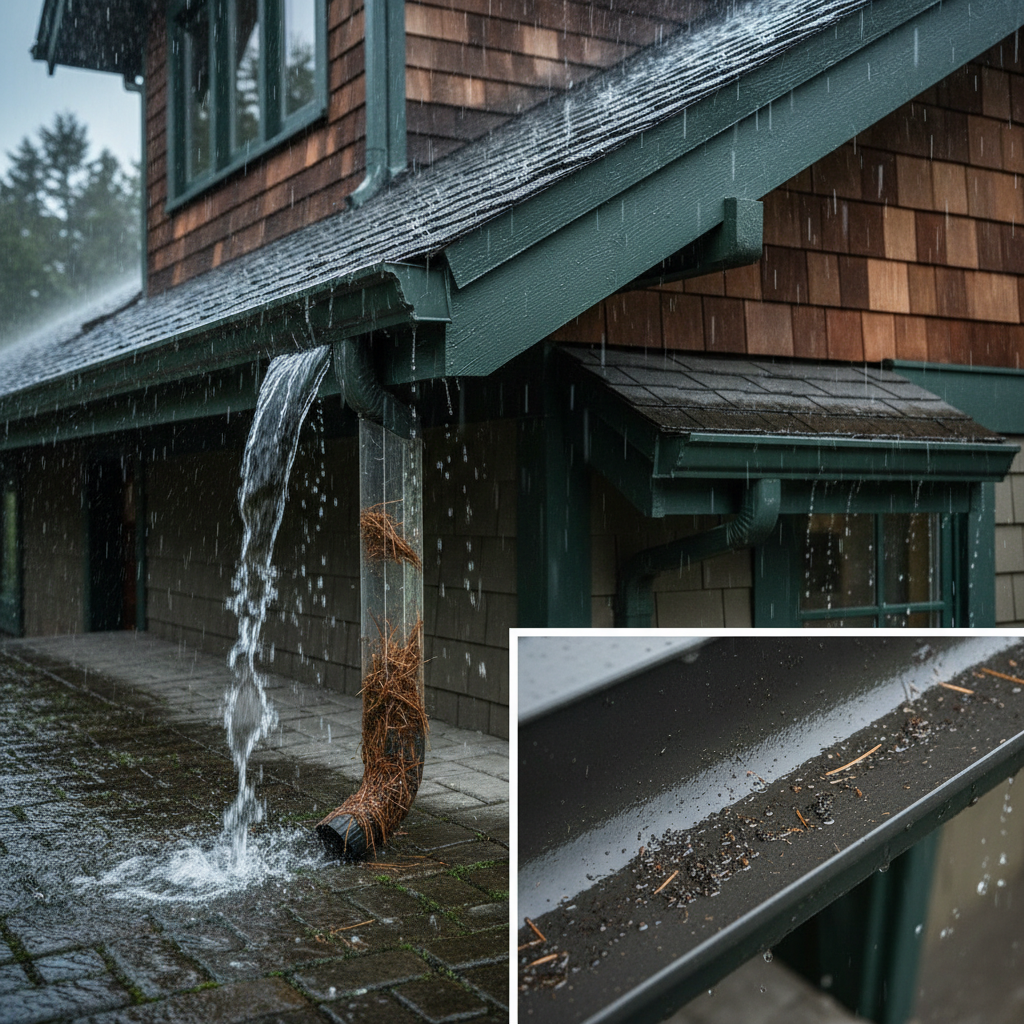
You scheduled a gutter cleaning, watched someone scoop debris from the channels, and expected the problem to be solved. Then the next October storm arrives, and water still pours over the edge near your front door or cascades down the corner of your garage. If your gutters overflow after cleaning, you are not alone, and the issue usually has less to do with the gutters themselves and more to do with what happens below them or inside them.
In Beaverton and surrounding western Portland communities, homeowners and property managers often face this frustrating situation after fall rains begin. Understanding why gutters overflow after cleaning requires looking beyond the visible channels to examine downspouts, gutter slope, and the fine debris that standard cleanings sometimes miss. This guide walks through the most common hidden causes, explains how to test for downspout clogs, and covers what a thorough professional gutter cleaning should include to prevent overflow during heavy Pacific Northwest rain.
Common Reasons Gutters Overflow Even After Cleaning
When gutters continue to overflow after someone has cleared visible leaves and twigs, the water has to be going somewhere other than down the downspouts. Several issues can block or slow the flow even when the main gutter channels appear clean.
The first and most frequent cause is a clogged downspout. Many cleanings focus on removing the bulk debris from the horizontal gutter troughs but do not verify that the vertical downspouts are flowing freely. A packed mass of needles, compacted leaves, or even a tennis ball or bird nest can create a plug inside the downspout elbow or vertical run. When that happens, water backs up in the gutter and spills over the front edge.
A second common issue is incorrect gutter pitch. Gutters must slope gently toward the downspout outlets, typically about a quarter inch for every ten feet of run. If a section sags, has settled over time, or was installed level, water will pool in that low spot instead of flowing toward the outlet. During light rain, the pooled water may slowly drain, but when heavy rain fills the gutter faster than the sluggish pitch can move it, overflow occurs at the lowest point.
A third hidden problem is fine debris that remains after a surface cleaning. Douglas fir needles, hemlock needles, moss fragments, and decomposed organic matter can form a dense mat along the gutter bottom or pack into the outlet opening. This material does not look like a pile of leaves, so it may be overlooked during a quick cleanup, yet it restricts water flow just as effectively as a complete blockage.
Finally, undersized or poorly positioned downspouts can limit drainage capacity. A long gutter run with only one small downspout may handle typical drizzle but cannot keep up with a Pacific Northwest downpour. When the system cannot move water fast enough, it overflows even when technically clean.
How to Tell If a Downspout Is Clogged: Simple Tests and Signs
Diagnosing a clogged downspout does not require special tools. Start by running water from a garden hose into the gutter near the outlet while watching the bottom of the downspout. A clear downspout will produce a steady stream of water from the bottom outlet within seconds. A clogged downspout will either produce no water, a weak trickle, or cause water to back up and spill over the gutter edge.
Another visual sign is water dripping or leaking from the seams of the downspout itself. If you see moisture seeping from the elbow joint or a seam partway down the vertical run during rain, water is backing up behind a blockage and escaping through the nearest gap.
You can also listen for unusual sounds. A functioning downspout produces a clear rushing or gurgling noise as water moves through it. A clogged downspout may sound hollow, produce intermittent drips, or be completely silent even when the gutter above is full.
If you suspect a clog but cannot confirm it from the ground, a professional crew can disassemble the downspout sections or use a plumber's snake or pressure washer to clear the blockage. Do not attempt to force objects into the downspout from the top or climb a ladder during rain to investigate. A thorough gutter inspection during dry weather is the safer approach.
Why Douglas Fir Needles and Fine Debris Clog Downspouts Faster Than Leaves
In the Pacific Northwest, Douglas fir needles present a specific challenge for gutter systems. Unlike broad maple or oak leaves, which are large and relatively easy to scoop out, Douglas fir needles are thin, flexible, and tend to weave together as they decompose. When needles accumulate in gutters, they can form a dense, interlocking mat that holds water like a sponge and resists being swept away by rain flow.
These needles are small enough to slide into the gutter outlet and enter the downspout opening. Once inside, they pack together, especially at the elbow where the horizontal outlet transitions to the vertical run. Over time, this creates a tough plug that water cannot push through. A cleaning that removes the visible needles from the gutter trough but does not flush or clear the downspout will leave that plug in place, causing gutters to overflow during the next heavy rain.
Hemlock needles, cedar fronds, and moss fragments behave similarly. Moss in particular can break apart into fine green particles that settle into every crevice and contribute to slow drainage. According to Oregon State University Extension, the combination of frequent rain and organic debris in the Pacific Northwest requires more frequent gutter maintenance than drier regions experience. Homeowners near conifer trees may need to clean gutters twice a year or more, depending on tree density and proximity to the roofline.
A thorough cleaning should include flushing the downspouts with water or using a plumber's snake to break up compacted material. Simply removing debris from the gutter channels is not enough to ensure that fine particles and needles have not already entered the drainage path.
Gutter Pitch Problems: When Sections Do Not Drain Properly
Even if the downspouts are clear and the gutters are free of debris, water can still overflow if the gutter pitch is incorrect. Gutters must slope continuously toward the outlet to allow water to flow rather than pool. The standard pitch is about a quarter inch of drop for every ten feet of horizontal run, a subtle angle that is difficult to see from the ground.
Over time, gutter hangers can loosen, fascia boards can warp, or settling can cause sections of the gutter to sag or tilt backward. When a gutter section loses its pitch, water collects in the low spot. During light rain, the pooled water may eventually find its way to the outlet, but during a downpour, the gutter fills faster than the sluggish flow can drain, and water spills over the front edge.
You can check for pitch problems by observing where water stands after a rain. If you see a section of gutter that still holds water hours after the rain stops, that section is not draining properly. A professional crew can adjust gutter hangers, add supports, or realign the gutter to restore the correct slope.
In some cases, the original installation did not include enough pitch, or long gutter runs were installed with outlets only at one end. These design issues limit drainage capacity and may require adding a second downspout or repositioning the outlet to improve flow.
How Heavy Oregon Rain Exposes Capacity and Flow Issues
Beaverton and surrounding western Portland communities experience heavy, sustained rain during fall and winter storms. According to the National Weather Service, the region can see rainfall rates exceeding an inch per hour during intense storm cells. When rain falls that fast, gutter systems must move a high volume of water quickly, and any restriction, bottleneck, or design flaw becomes immediately visible.
A gutter system that seems adequate during light drizzle may overflow during a heavy downpour because the flow rate exceeds the system's capacity. If the downspouts are undersized, the outlets are partially blocked, or the pitch is too shallow, the gutters cannot empty fast enough to keep up with incoming water.
Heavy rain also exposes problems that are not obvious during dry inspections. A small amount of compacted debris in the outlet may not restrict a trickle of water but will create a dam when a large volume of rain tries to funnel through the same opening. Similarly, a slight sag in the gutter may not matter during a light shower but will cause a backup when the gutter fills to capacity.
For this reason, the best time to evaluate gutter performance is during or immediately after a heavy rain. Walk around your property and watch where water is flowing. Look for any sections where water is pouring over the edge, dripping from seams, or pooling in the gutter channels. These observations will help a professional crew identify the specific areas that need attention.
What a Professional Gutter Cleaning Should Include
A thorough professional gutter cleaning goes beyond scooping visible debris from the channels. At Forest Trunk, a complete cleaning includes removing all leaves, needles, moss, and organic matter from the gutter troughs, flushing the downspouts with water to verify they are clear, and inspecting the gutter system for pitch problems, loose hangers, and signs of damage.
The crew should test each downspout by running water through it and confirming a strong flow from the bottom outlet. If a downspout is clogged, it should be cleared using a plumber's snake, disassembly, or high-pressure flushing. Simply removing debris from the gutter top is not enough if the drainage path remains blocked.
A professional cleaning should also include checking for standing water in the gutters after flushing. If water pools in a section, the crew should identify whether the issue is a pitch problem, a sagging hanger, or an outlet obstruction. In some cases, minor adjustments or adding supports can restore proper drainage without replacing the entire gutter.
The crew should also inspect gutter seams, end caps, and outlet connections for leaks or separation. These issues can develop over time and contribute to water escaping the system during heavy rain. Addressing them during a cleaning visit prevents more costly repairs later.
Finally, a professional crew should remove all debris from the roof, the gutters, and the surrounding ground, leaving your property cleaner than they found it. Debris left on the roof or in downspout splash zones will wash back into the gutters during the next rain, undoing the cleaning work.
When to Schedule a Follow-Up Inspection
If your gutters overflow during heavy rain even after a recent cleaning, do not wait until the next storm to investigate. Contact a professional crew to inspect the downspouts, check the gutter pitch, and verify that fine debris has not reformed a blockage. Early attention to these issues prevents water damage to your foundation, siding, and landscaping.
For properties near Douglas fir, hemlock, or cedar trees, consider scheduling gutter cleanings twice a year, typically in late spring after the pollen and seed drop and again in late fall after most needles have fallen. Properties with heavy tree cover may benefit from more frequent service or the installation of gutter guards designed to handle fine debris.
If you notice water staining on siding, erosion near the foundation, or water pooling against the house during rain, these are signs that your gutter system is not managing water properly. A professional inspection can identify whether the issue is a simple blockage, a pitch adjustment, or a larger capacity problem that requires adding downspouts or upgrading the system.
Schedule a Thorough Gutter Inspection and Cleaning With Forest Trunk
If your gutters overflow after cleaning or you are preparing your property for the fall and winter rainy season, Forest Trunk can help. As a family-owned tree service and property care company based in Beaverton, Oregon, we provide complete gutter cleaning for residential and commercial properties throughout Beaverton and surrounding western Portland communities. Our licensed, bonded, and insured crew removes all debris, flushes downspouts to verify clear flow, checks for pitch and capacity issues, and leaves your property cleaner than we found it.
We offer free, no-pressure assessments and upfront quotes so you know exactly what to expect. Whether you need a one-time cleaning before the storm season or regular seasonal service to stay ahead of Douglas fir needles and Northwest moss, we tailor our approach to your property's specific needs.
To schedule a gutter inspection and cleaning, visit foresttrunk.com or call (971) 427-3129. Describe the overflow issue, any nearby trees, and when you last had your gutters cleaned so we can assess the situation and recommend the best solution. Our goal is to keep water flowing where it belongs so you can enjoy dry foundations, clean siding, and peace of mind during every Pacific Northwest storm.