Tree Removal and Trimming
Backyard Tree Removal With Limited Access in Beaverton: Your Options When There Is No Vehicle Path
Need to remove a tree behind a fence or in a tight backyard? Learn how professional crews handle limited access tree removal in Beaverton when equipment cannot reach the site.
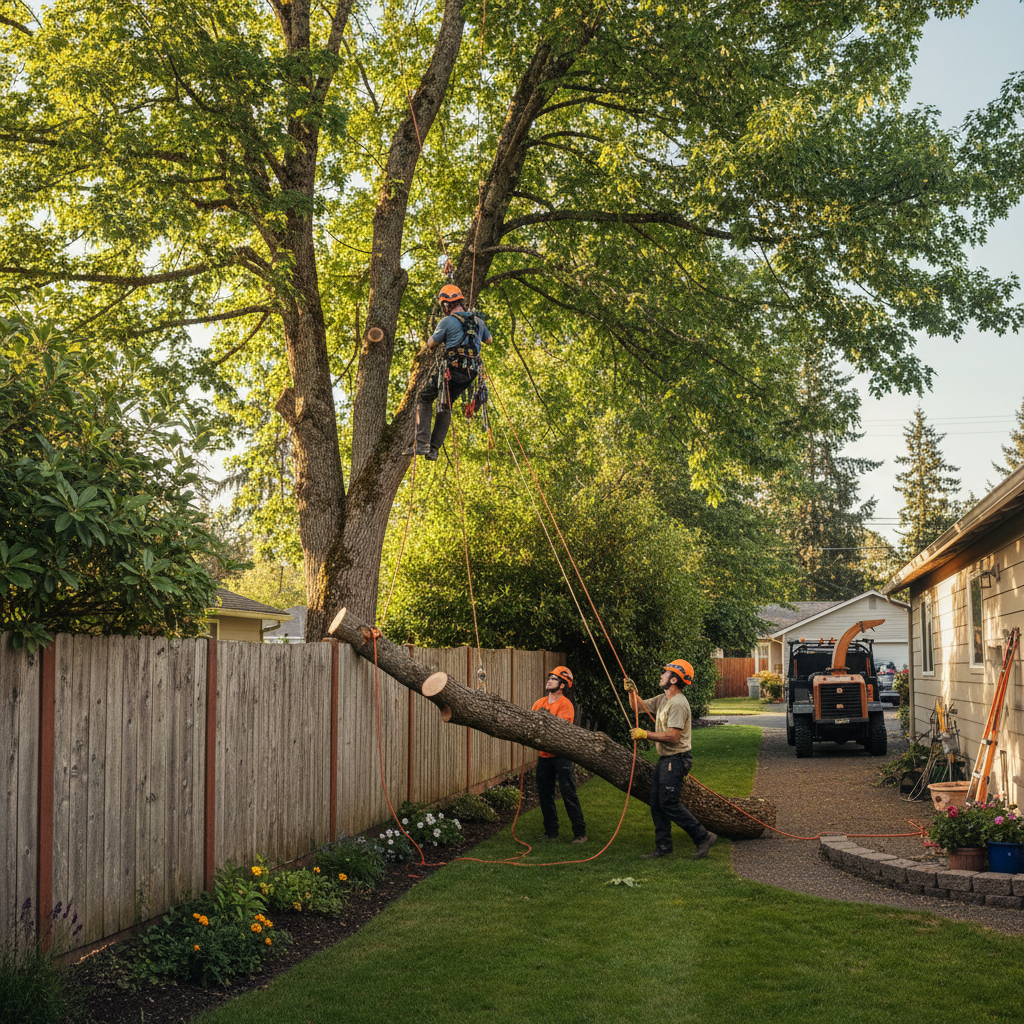
You need a tree removed from your backyard, but there is a problem. The tree stands behind a locked gate, twenty feet from the nearest driveway. Your side yard is narrow, your fencing is intact, and there is no vehicle path to the tree. You wonder if removal is even possible without tearing down a fence or bringing in expensive heavy equipment.
The good news is that professional tree crews complete limited access tree removal in Beaverton, Oregon every week, working in tight backyards, behind fences, and on hillside lots where trucks and chippers cannot follow. With manual rigging, sectional lowering, and careful debris handling, experienced crews can safely remove trees from nearly any location. Here is how the process works, what to expect, and how to plan for removal when vehicle access is not an option.
What Counts as Limited Access for Tree Removal
Limited access means the tree cannot be reached by standard removal equipment like bucket trucks, log loaders, or tow-behind chippers. Common scenarios include trees located in fenced backyards with narrow side gates, trees on hillside lots where slopes prevent vehicle travel, trees behind buildings or accessory structures, and trees in greenbelts or common areas with no direct street connection.
In western Portland communities, many residential properties feature fully fenced yards with three-foot or four-foot side gates, planted side yards without hardscaping, or steep terrain that makes vehicle travel unsafe. Commercial properties may have trees in landscaped courtyards, behind parking structures, or in areas designed for pedestrian access only.
When evaluating your property, crews consider the path from the street to the tree, the width of gates and walkways, ground conditions that affect equipment movement, overhead utility lines that limit crane positioning, and the distance debris must travel to reach a vehicle or chipper at the curb.
A tree in your front yard with clear driveway access is a straightforward removal. A tree forty feet behind your home, accessible only through a three-foot gate and across a lawn with underground sprinklers, requires a limited-access approach. The work is more labor-intensive, but it is a routine challenge for experienced crews.
Can a Tree Be Removed Without a Crane? Manual Rigging and Sectional Work
Many property owners assume that large trees require a crane, but most removals in tight spaces rely on manual rigging and sectional lowering. A climber ascends the tree using ropes and a safety harness, removes branches working from the top down, then cuts the trunk into manageable sections. Each section is rigged with ropes and lowered in a controlled manner to avoid damaging the ground, nearby structures, or landscaping below.
This approach works for trees of nearly any size, provided the tree has sufficient structural integrity for a climber to work safely. Dead trees, trees with extensive decay, or heavily leaning specimens may require additional rigging points, support systems, or a crane if the tree cannot support a climber's weight. A professional assessment determines the safest removal method based on the tree's condition and surrounding hazards.
Manual rigging is slower than crane-assisted removal, but it eliminates the need for vehicle access to the tree and avoids the cost and logistical complexity of positioning a crane on a residential street. According to the Tree Care Industry Association, skilled rigging allows crews to manage large wood in confined spaces without compromising safety or property protection.
For trees located in very tight quarters, a climber may need to lower sections vertically through a narrow drop zone, piece by piece. This technique, sometimes called speedlining or negative rigging, uses anchor points and friction devices to control descent speed and landing position. It requires experience and careful planning, but it makes removal possible in spaces where a falling section would strike fences, sheds, or patio covers.
How Crews Move Equipment and Debris Through Narrow Gates and Yards
Once the tree is sectioned and lowered, the crew must move cut wood, branches, and equipment back to the street. In limited-access situations, this often means carrying debris by hand, using wheelbarrows or yard carts, or employing small, portable equipment that fits through narrow openings.
Chainsaws, hand tools, rigging gear, and safety equipment are carried to the work site. Cut sections of trunk are carried, rolled, or carted to a chipper or truck staged at the curb. Branches are bundled or fed through a chipper positioned as close to the property as the gate allows. If the chipper cannot reach the backyard, crew members carry or cart brush to the street in stages.
Some crews use compact track loaders or mini skid steers narrow enough to pass through gates, but these machines require firm, level ground and enough clearance to maneuver. On soft lawns or slopes, manual labor remains the most practical option. For very large removals, crews may schedule extra time or additional workers to handle the increased hauling distance.
Property owners sometimes worry about crew members walking repeatedly across lawns or through garden beds. Professional crews use plywood walkways, tarps, or ground protection mats to distribute weight and prevent rutting or plant damage. They plan debris routes before starting work, choose the path that causes the least disruption, and restore any disturbed areas after hauling is complete.
Stump Grinding in Limited Access Areas
Stump grinding equipment also faces access challenges. Standard stump grinders are heavy, wide machines that may not fit through narrow gates or travel safely over soft ground. Compact grinders designed for tight spaces can pass through gates as narrow as 36 inches and grind stumps below grade without tearing up surrounding turf.
If a stump cannot be reached by any grinder, alternatives include manual stump removal using digging and cutting tools, chemical stump treatments that accelerate decay, or leaving the stump in place and cutting it flush with the ground. Grinding is usually the most practical option when access allows, and property owners should confirm grinder access during the initial assessment.
Protecting Landscaping, Fences, and Hardscaping During Removal
Limited-access sites often have mature landscaping, irrigation systems, fences, patios, and other features that must remain undamaged. Professional crews take steps to protect these elements before removal begins.
Surrounding plants and shrubs are tied back, covered with tarps, or temporarily pruned to create a safe work zone. Fences and gates are padded or protected with plywood where debris or equipment will pass nearby. Irrigation heads and valve boxes are marked and avoided. Patios, walkways, and decorative rock are covered with tarps or mats to prevent scratches, dents, or staining from wood, sap, or equipment.
Rigging techniques are chosen to direct falling sections away from vulnerable features. Ropes and lowering devices absorb impact energy so that heavy wood lands gently rather than crashing into the ground or nearby structures. Climbers communicate constantly with ground crews to adjust rigging and avoid obstacles as conditions change.
After the tree is removed and debris is cleared, crews inspect the site, remove protection materials, and address any minor turf damage or displaced mulch. Oregon State University Extension notes that proper planning and site preparation prevent most property damage during professional tree work, even in confined spaces.
How Limited Access Affects Removal Costs and Timeline
Limited access increases the labor required for removal, which affects both cost and the time needed to complete the job. A tree that can be felled in an open area or reached with a bucket truck may take a few hours. The same tree in a fenced backyard, requiring manual rigging and repeated trips through a narrow gate to haul debris, may take a full day or more.
Removal costs depend on tree size, condition, access constraints, the distance debris must be hauled, nearby structures that require careful rigging, stump grinding access, and the amount of cleanup requested. A small ornamental tree behind a fence may add only a modest access premium, while a large fir in a tight hillside location with a long haul to the street represents a significant labor commitment.
Property owners should request a detailed, upfront quote that accounts for access challenges. Reputable crews visit the site, measure the tree, evaluate the path from street to tree, and explain how access affects the scope of work. Avoid companies that provide phone estimates without seeing the property, as they cannot accurately assess access constraints or hidden hazards.
Timeline also matters. Limited-access jobs may require scheduling extra crew members or dividing the work across multiple days to avoid fatigue and maintain safety. Storm-damaged trees or hazardous leaners may receive priority scheduling, but non-urgent removals are planned to allow enough time for careful work without rushing.
What Forest Trunk Does to Plan and Execute Tight-Access Jobs
Forest Trunk is a family-owned tree service and property care company based in Beaverton, Oregon, serving surrounding western Portland communities. The licensed, bonded, and insured crew handles limited access tree removal regularly, working in fenced backyards, hillside lots, and areas where equipment cannot follow.
The process begins with a free, no-pressure assessment. A crew member visits your property, examines the tree and surrounding structures, walks the path from street to tree, measures gate widths and clearances, and discusses your concerns about landscaping or irrigation. This visit produces a clear, upfront quote that reflects the actual work required, including access challenges.
During removal, the crew uses manual rigging and sectional lowering to bring the tree down safely. Climbers work from the top down, removing branches and cutting trunk sections that are lowered with ropes to avoid impacting the ground. Ground crews manage debris, protect landscaping with tarps and plywood, and haul cut wood and brush to a chipper or truck at the street.
Forest Trunk emphasizes careful workmanship and thorough cleanup. The crew clears all wood, branches, and debris, rakes the work area, and leaves your property cleaner than they found it. If stump grinding is part of the quote and access allows, grinding is completed and the resulting chips are spread or hauled away as requested.
For property managers and homeowners in Beaverton and nearby west-side communities, Forest Trunk offers responsive communication, honest quotes, and a commitment to protecting your property while completing safe, professional tree work. The crew understands that limited access requires extra planning, patience, and labor, and prices reflect the actual scope rather than surprise charges after work begins.
Get a Free Assessment to Discuss Your Property Layout
If you have a tree in a fenced backyard, on a hillside, or behind a building and you are unsure whether removal is possible without tearing down structures or bringing in a crane, a professional assessment provides answers. Experienced crews evaluate access daily and can explain your options, the removal process, expected costs, and steps taken to protect landscaping and hardscaping.
Forest Trunk invites homeowners, commercial property owners, and property managers in Beaverton and surrounding western Portland communities to request a free assessment. Describe the tree's location, nearby structures, gate widths or access paths, and any concerns about irrigation, fences, or plantings. The crew will visit your property, confirm service coverage for your address, and provide a clear, upfront quote for removal, stump grinding if requested, and complete cleanup.
Contact Forest Trunk through foresttrunk.com or by calling (971) 427-3129 to schedule your free assessment. The crew is ready to explain how limited-access removal works, answer your questions, and plan a safe, careful removal that respects your property and your peace of mind.