Tree Removal and Trimming
Douglas Fir Pruning in Oregon: Lower Branches, Timing, and Why Topping Is Not the Answer
Learn when to prune Douglas fir trees in Oregon, how to safely remove lower branches, and why topping harms evergreens. Get species-specific care guidance for your property.
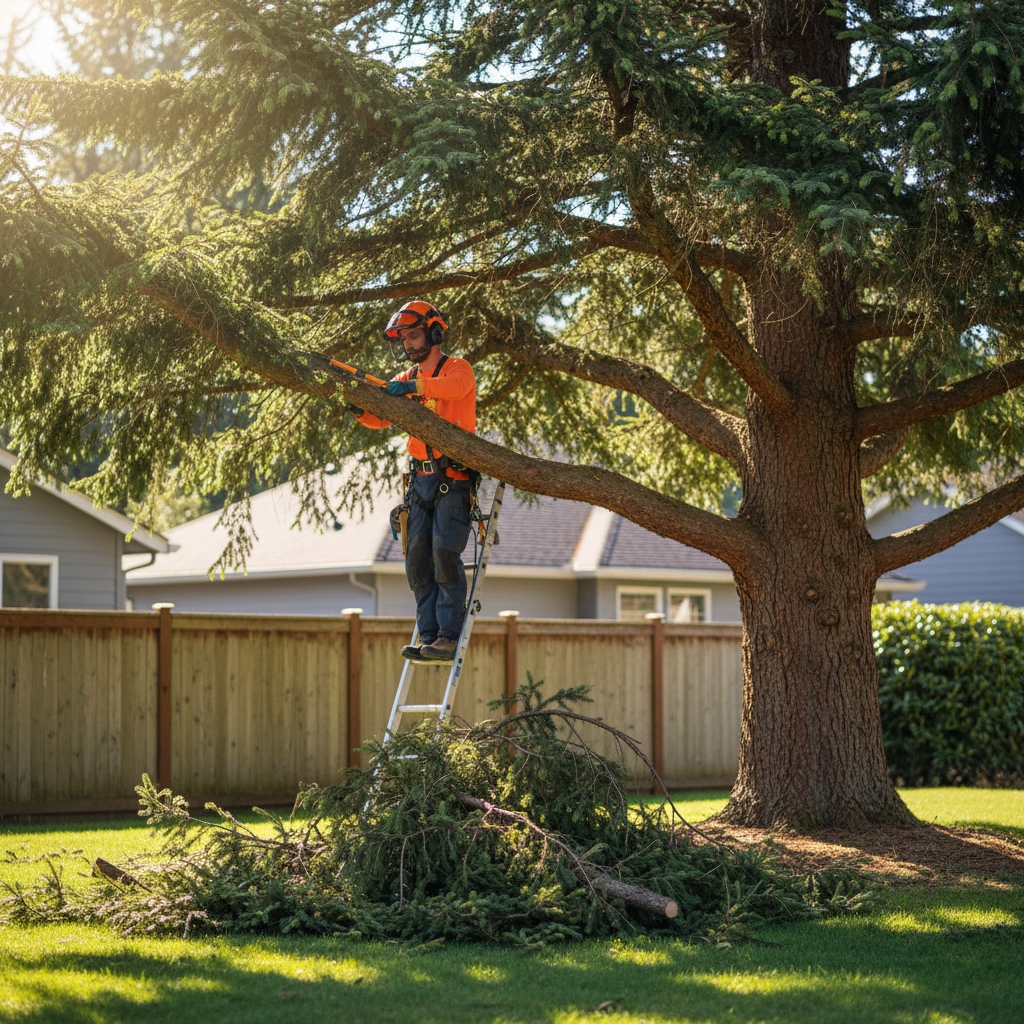
If you have a Douglas fir on your Beaverton property, you have one of the Pacific Northwest's most iconic trees. You also have questions. Can you safely trim those lower branches brushing the fence? When is the best time to prune? And if the tree is getting too tall, can you just have the top cut back?
Understanding when to prune Douglas fir trees in Oregon and how these evergreens respond to trimming will help you keep your tree healthy, attractive, and safe without causing lasting damage. Unlike deciduous trees that drop their leaves each fall, Douglas firs and other conifers follow different growth patterns and have specific needs when it comes to pruning. Making the wrong cut at the wrong time, or topping the tree to control height, can weaken the structure, invite disease, and create problems that last for years.
This guide explains the right way to care for your Douglas fir, from timing your pruning to removing lower branches responsibly, and offers better alternatives to topping when height becomes a concern.
Why Douglas Firs Need Different Care Than Deciduous Trees
Douglas firs grow differently than maples, oaks, or other trees that shed their leaves each year. Instead of putting out new growth from multiple points along each branch, Douglas firs grow from a central leader at the top and extend branch tips outward each spring. This growth pattern means that cutting back into older wood, where there are no visible buds or active needles, often results in bare stubs that will not produce new growth.
Deciduous trees can sprout new shoots from dormant buds along branches and trunks, which allows them to recover from heavier pruning. Conifers like Douglas firs lack that ability in most areas of the tree. Once you remove a branch or cut back to bare wood, that section typically stays bare. The tree does not fill in the gap the way a deciduous tree would.
According to Oregon State University Extension, conifers should be pruned lightly and selectively, focusing on removing dead, damaged, or crossing branches rather than reshaping the entire canopy. Heavy pruning disrupts the tree's natural form, reduces its ability to photosynthesize, and exposes interior wood to moisture and pests.
This difference in growth habit is why understanding species-specific care matters. What works for trimming a maple in your front yard will not work the same way for a Douglas fir in your backyard.
When to Prune a Douglas Fir: Dormant Season and Light Shaping
The best time to prune a Douglas fir in Oregon is during the tree's dormant season, which runs from late fall through early spring, typically November through March. Pruning during dormancy minimizes stress on the tree, reduces sap flow, and lowers the risk of attracting insects or introducing disease through fresh cuts.
Late winter, just before the growing season begins, is often ideal. The tree is still dormant, but it will begin active growth soon after pruning, allowing cuts to seal and the tree to direct energy into healthy branches. Pruning too early in fall, while the tree is still actively growing, can stimulate new growth that will not harden off before winter freezes arrive.
Avoid pruning during wet conditions when fungal spores are more likely to spread. Oregon's rainy season makes this a practical concern. If you need to remove a broken or hazardous branch outside the dormant window, that is appropriate. Safety comes first. For planned shaping or lower-branch removal, however, waiting for drier, dormant-season conditions gives the tree the best chance to recover without complications.
According to the International Society of Arboriculture, light corrective pruning can be done on conifers during dormancy without harming the tree's structure, as long as you avoid removing more than 15 to 20 percent of the live crown in a single year. Removing too much foliage at once reduces the tree's ability to produce energy and can weaken its overall health.
Can You Trim Lower Branches on a Douglas Fir? What to Know Before You Cut
Yes, you can trim lower branches on a Douglas fir, and this is one of the most common reasons homeowners in Beaverton seek Douglas fir tree trimming services. Lower branches may block walkways, press against fences or structures, obstruct views, or create dense shade that prevents grass and plants from growing underneath.
Removing lower branches, a practice called limbing up or crown raising, is generally safe for Douglas firs when done correctly. The key is to avoid removing too many branches at once and to make clean cuts just outside the branch collar, the swollen area where the branch meets the trunk. Cutting into the collar or leaving a long stub can slow healing and invite decay.
A good guideline is to keep living branches on at least the lower two-thirds of the tree's height. Removing more than that reduces the tree's ability to photosynthesize and puts stress on its growth. For a 50-foot Douglas fir, for example, you would keep living branches on at least the lower 33 feet and only remove growth below that point.
Also consider the tree's age and health. Younger trees can tolerate moderate limbing up better than older, stressed, or declining trees. If your Douglas fir already shows signs of poor health, such as thinning needles, dieback in the crown, or significant lean, removing lower branches may add stress rather than improve appearance.
If you are unsure how much to remove or whether a particular branch is safe to cut, a professional assessment can provide clarity. Forest Trunk offers free, no-pressure evaluations and can explain which branches can be removed without harming the tree's structure or long-term health.
Why Topping an Evergreen Tree Is Harmful and What to Do Instead
Topping, the practice of cutting the main trunk or leader back to stubs or lateral branches to reduce height, is one of the most damaging things you can do to a Douglas fir or any evergreen tree. While it may seem like a quick solution to a tree that has grown too tall for its space, topping creates serious structural, health, and safety problems.
When you remove the top of a Douglas fir, you remove the tree's natural growth point. The tree cannot grow upward in the same controlled way. Instead, it often responds by producing multiple weak shoots near the cut, creating a dense cluster of poorly attached growth. These shoots grow quickly but lack the strong attachment of the original leader, making them prone to breaking in windstorms, a common concern in western Oregon.
Topped trees also lose a significant portion of their foliage, which reduces their ability to produce energy through photosynthesis. This stresses the tree and makes it more vulnerable to pests, disease, and environmental stress. Large topping cuts expose the tree's interior wood to moisture and decay fungi, and because conifers do not compartmentalize decay as effectively as hardwoods, rot can spread through the trunk over time.
According to the International Society of Arboriculture, topping is considered an unacceptable pruning practice that harms tree health, increases long-term maintenance costs, and reduces property value. The Tree Care Industry Association describes topping as the most harmful tree pruning practice, often leading to decline or premature death.
If your Douglas fir has outgrown its space, better options include selective thinning to reduce weight and wind resistance, removing individual branches that pose hazards, or, in some cases, complete removal and replacement with a species better suited to the available space. Removal is a significant step, but it avoids the ongoing problems and costs that result from topping.
Forest Trunk can assess your tree's condition, explain realistic options, and help you decide whether selective trimming or removal is the better long-term choice for your property.
Signs Your Douglas Fir Needs Professional Assessment
Not every Douglas fir needs regular pruning, but certain warning signs indicate that a professional assessment would be helpful. Recognizing these signs early can help you address problems before they lead to property damage or safety hazards.
Watch for these indicators that your tree may need attention:
- Dead or broken branches. Branches with brown needles that do not green up in spring, or limbs broken by wind or snow, should be removed promptly. Dead wood can fall without warning.
- Branches touching structures. Limbs resting on your roof, rubbing siding, or pressing against fences can cause damage over time and provide pathways for pests to enter your home.
- Thinning canopy or browning needles. Sparse foliage, needles turning brown from the inside out, or dieback in the upper crown can signal disease, root problems, or environmental stress.
- Leaning trunk. A Douglas fir that has developed a noticeable lean, especially if the lean has increased recently or if you see soil lifting at the base, may have root damage or instability.
- Cracks or splits in the trunk. Visible cracks, seams, or areas where bark is separating can indicate internal decay or structural weakness.
- Heavy growth on one side. Uneven weight distribution can create stress on the trunk and increase the risk of failure during windstorms.
- Fungal growth at the base. Mushrooms or conks growing from the trunk or root flare often indicate internal decay, a serious concern that requires professional evaluation.
If you notice any of these signs, or if you simply have questions about whether your Douglas fir needs trimming, a professional assessment can provide clear answers. Forest Trunk's licensed, bonded, and insured crew will evaluate the tree's health, structure, and position relative to buildings and other features, then explain your options in plain terms.
What to Expect When Forest Trunk Trims Your Douglas Fir
When you contact Forest Trunk for Douglas fir tree trimming in Beaverton, the process begins with a free, on-site assessment. A crew member will examine your tree, discuss your concerns and goals, and explain which branches can be safely removed and which should be left to maintain the tree's health and structure.
You will receive an upfront, written quote that covers the planned work, access needs, debris handling, and cleanup. There are no surprise charges. If you decide to move forward, the crew will schedule the work at a time that fits your needs.
On the day of service, the team arrives with the equipment needed to make clean, precise cuts. For lower-branch removal, that may involve hand saws, pole saws, or climbing gear, depending on the tree's size and the branches being removed. For higher or more complex work, the crew uses ropes and rigging to control each cut and protect the surrounding property.
Forest Trunk takes care to protect your lawn, landscaping, and nearby structures throughout the process. Branches are lowered carefully rather than dropped, and the crew works methodically to avoid damaging fences, garden beds, or paved areas.
After trimming is complete, the team handles all debris. Branches are chipped or hauled away, and the work area is cleaned thoroughly. If you would like wood cut to firewood length or kept for other uses, let the crew know during the assessment. The goal is to leave your property cleaner than it was before the work began.
Because Forest Trunk is a locally based, family-owned business, communication and responsiveness are priorities. If you have questions during the process or need follow-up guidance on caring for your trimmed tree, the crew is available to help.
Next Steps: Request a Free Tree Assessment in Beaverton
If you are wondering whether your Douglas fir needs pruning, how much you can safely remove, or what your options are for a tree that has outgrown its space, the best next step is a professional assessment. Forest Trunk provides free, no-pressure evaluations for homeowners and property managers throughout Beaverton and surrounding western Portland communities.
During the assessment, you can describe your concerns, ask about timing and costs, and get clear recommendations based on your tree's condition and your property's needs. Whether you need lower branches removed for clearance, dead wood taken out for safety, or guidance on alternatives to topping, the crew will explain the work in straightforward terms and provide an honest quote.
To schedule your free Douglas fir assessment, visit foresttrunk.com or call (971) 427-3129. Describe the tree's size, location, and any concerns you have, and the crew will confirm service availability for your address. Forest Trunk is licensed, bonded, and insured (Oregon CCB #243545), and the team is ready to help you care for your trees with the attention and skill they deserve.