Stump Grinding and Lawn Restoration
Stump Grinding vs. Stump Removal: Which Option Fits Your Next Yard Project?
Deciding between stump grinding and complete removal depends on your project. Learn how each approach affects costs, roots, and future landscaping plans in Beaverton.
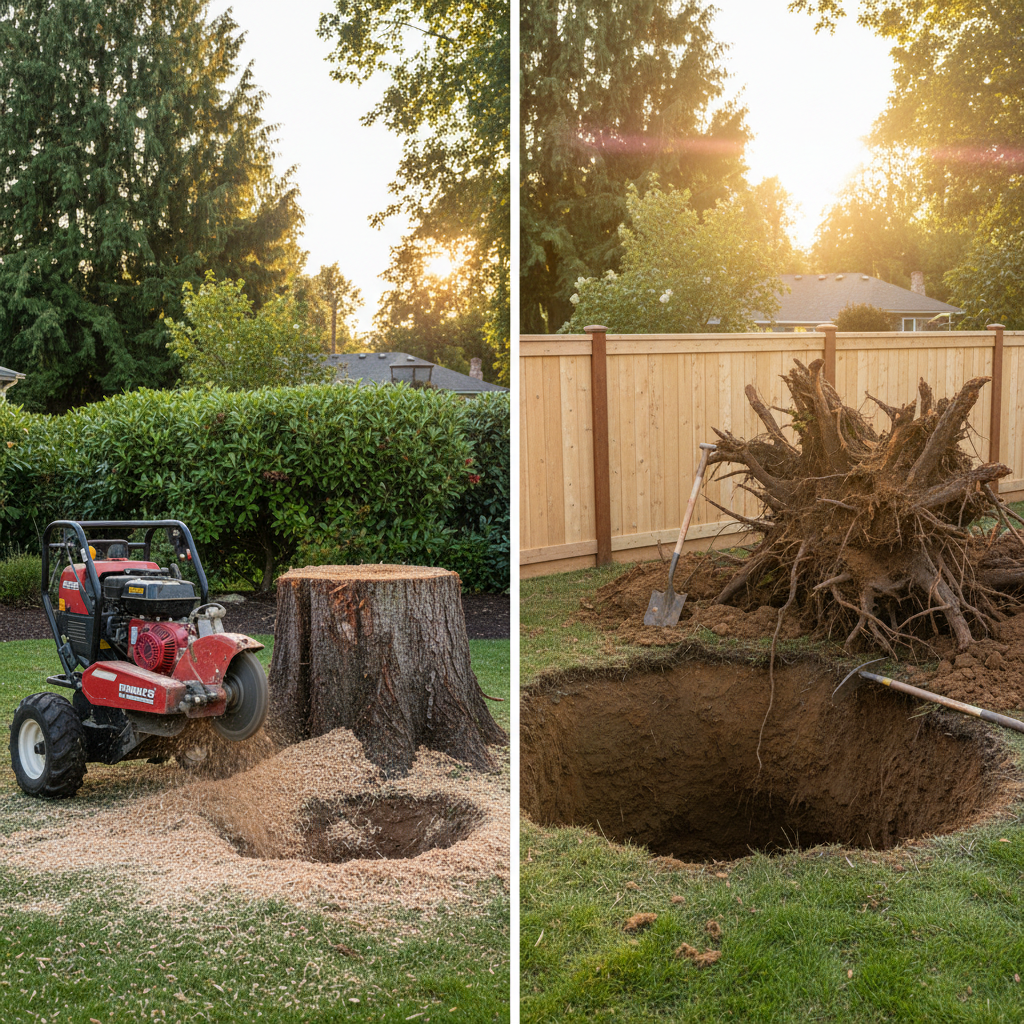
After a tree comes down, the stump left behind can sit in the way of your plans for that space. Maybe you need a new fence line to run through that spot, or you want to plant grass where the old oak used to stand, or you are planning a patio and need a level surface. Whatever the goal, you face a choice: grind the stump a few inches below grade or dig out the whole thing, roots and all. Each approach has its place, and understanding the difference helps you match the method to your project without paying for more work than you need or skipping a step that causes headaches later.
Homeowners and property managers in Beaverton and surrounding western Portland communities often ask Forest Trunk which stump-handling option makes sense after a removal. The answer depends on what you plan to do with the space, how quickly you want to move forward, and what you are willing to spend. Let's walk through how stump grinding and complete stump removal differ, what happens to the roots afterward, and how to choose the right fit for fences, lawns, patios, and replanting.
What Is Stump Grinding and How Far Below Grade Does It Go?
Stump grinding uses a specialized machine with a rotating cutting wheel to chip away the visible stump and the upper portion of the root plate. The grinder works its way across the stump surface, reducing wood to chips and sawdust until the stump sits several inches below the surrounding soil level. Most residential grinds take the stump down between four and eight inches below grade, which is deep enough to cover the spot with topsoil and grass seed or lay sod over the area.
The grinding process leaves the root system in place underground. The machine removes the stump itself and the major roots close to the surface within the grinding zone, but it does not excavate the spreading lateral roots that extend outward or the deeper anchor roots that run below the grinder's reach. Over time, those remaining roots decompose naturally, breaking down as soil organisms work through the wood. According to Oregon State University Extension, decomposition rates depend on the tree species, root diameter, soil moisture, and microbial activity, with smaller roots breaking down faster than thick tap roots.
The grinding creates a pile of wood chips and sawdust mixed with soil. The crew can haul the chips away, spread them as mulch in other areas of your property, or leave them on site for you to use. After grinding, the depression left behind can be filled with topsoil, compacted lightly, and seeded or sodded. Because the roots remain below, the soil may settle over the following months as decomposition progresses, and you may need to add more topsoil to keep the surface level.
Stump grinding is typically faster and less disruptive than full removal. The grinder accesses the site without large excavation equipment, and the work usually finishes in an hour or two for a single stump, depending on size and location. It costs less than complete removal because the labor, equipment, and site disturbance are more limited.
Complete Stump Removal: When Root Extraction Makes Sense for Your Project
Complete stump removal, sometimes called stump extraction, involves digging out the entire stump along with as much of the root ball as practical. The crew uses an excavator or other heavy machinery to lift the stump and attached roots out of the ground, creating a large hole where the root system used to sit. The process removes the visible stump, the root plate, and major structural roots, leaving a clean excavation that can be backfilled with fresh soil.
This approach makes sense when you need to ensure no woody material remains in the area where you plan to build, plant, or install underground features. For example, if you are pouring a concrete patio, building a new structure, installing an in-ground pool, or planting a replacement tree in the same spot, removing the root mass prevents future settling, rot pockets, or root interference. Complete removal also eliminates the chance of stump sprouting in species that can regenerate from remaining roots.
The trade-off is greater disruption and higher cost. Excavation equipment must access the site, which may require removing sections of fencing or navigating around landscaping. The hole left behind is larger and deeper than a grinding depression, and backfilling with quality topsoil adds material cost. The work takes longer, and the surrounding area may need regrading or replanting to restore a finished appearance. However, when your project requires a completely clear subsurface, the investment in full removal prevents complications down the line.
Not every property has space or access for the heavy equipment required for extraction. Stumps located close to buildings, between fences, or in tight backyard corners may be difficult or impossible to remove without significant collateral damage. In those cases, grinding may be the only practical option even if complete removal would otherwise suit the project goals.
Do Remaining Roots Cause Problems After Grinding? What to Expect Over Time
One of the most common questions property owners ask is whether the roots left behind after stump grinding will cause trouble. The short answer is that the roots will not regrow into a new tree, but they do take time to decompose, and that process can create minor settling or sprouting in certain species.
Once the stump and the living tissue in the upper root plate are ground away, the tree can no longer photosynthesize or draw nutrients through its canopy. The remaining roots are cut off from their energy source and begin to die back. Dead roots decompose gradually, with the timeline influenced by species, root size, soil conditions, and local climate. In the Pacific Northwest's moist environment, decay progresses more quickly than in dry climates, but large structural roots can still take several years to break down completely.
As the roots decay, the soil around them may settle, creating slight depressions in the lawn or landscape bed above. This settling is usually manageable with periodic top-dressing of soil and reseeding, but it can be more noticeable over large root systems from mature trees. If you are installing a new lawn or planting beds over a ground stump, expect to monitor the area and add soil as needed over the first year or two.
Some tree species, including certain willows, poplars, and elms, can send up new shoots from remaining roots even after the stump is gone. These suckers draw on stored energy in the root system and can emerge around the perimeter of the old stump location. Cutting or mowing the shoots repeatedly will exhaust the roots over time, or you can treat individual shoots with an appropriate herbicide following label directions. Most common landscape trees in Beaverton, such as Douglas firs and maples, do not sucker aggressively after grinding.
Roots left in place will not damage nearby foundations, driveways, or utilities as long as the tree is no longer living and growing. Dead roots shrink and decay rather than expand. However, if large roots were already pressing against a structure or utility line before removal, the decaying wood may leave voids or soft spots in the soil that require monitoring.
Can Tree Roots Grow After Stump Grinding?
Tree roots cannot grow after stump grinding in the sense of expanding the root system or developing into a new tree. The grinding process destroys the stump and the upper root plate where the tree's vascular system connects to the roots. Without a living stump to supply sugars and hormones, the severed roots have no mechanism to sustain growth. What can happen, depending on species, is that dormant buds on remaining roots may send up shoots using stored energy, but these shoots are not new growth from expanding roots. They are a last effort by the dying root system to regenerate, and they will fade once the stored reserves are depleted.
Choosing the Right Option for Fences, Lawns, Patios, and Replanting
The best choice between grinding and removal depends on what you intend to do with the space. Here is how to think through common scenarios.
Installing a Fence Line
If you need to run a fence through the area where a stump sits, grinding is usually sufficient as long as the fence posts will not land directly in the old stump location. Grinding the stump several inches below grade clears the path for the fence and allows post holes to be dug in the surrounding soil. If a post must go exactly where the stump was, you may need deeper grinding in that spot or a small amount of hand digging to remove remaining wood and roots within the post-hole footprint. Complete removal is rarely necessary for fence projects unless the entire fence line runs through a dense root plate and you need totally clear digging along the whole span.
For property managers or homeowners tackling stump grinding for a new fence in Beaverton, discussing post locations with the crew during the assessment ensures the grinding depth and coverage match the fence plan.
Restoring a Lawn or Planting Beds
Grinding works well for lawn restoration. After the stump is ground below grade, fill the depression with quality topsoil, compact it lightly to reduce future settling, and seed or sod over the area. Keep an eye on the spot over the next growing season and add soil if settling occurs. For planting beds where you will set shrubs, perennials, or groundcovers, grinding provides enough clearance as long as the new plants will not sit directly over the old root mass. Mixing compost into the fill soil improves drainage and helps new roots establish in the loose backfill.
If you want to plant a new tree in the same location, complete removal is the better choice. Planting a new tree directly over decaying roots can lead to poor establishment, settling around the root ball, or competition for space as the new roots try to grow through decomposing wood. Removing the old root system and backfilling with fresh soil gives the replacement tree a clean start.
Hardscaping Projects: Patios, Driveways, and Structures
Any project that involves pouring concrete, laying pavers, or building a structure over the stump location calls for complete removal. Decaying roots create voids and soft spots in the soil, which can lead to settling, cracking, or uneven surfaces in hardscaping. Removing the stump and roots, backfilling the hole with compacted structural fill or gravel, and allowing the area to settle before construction ensures a stable base. Grinding alone will not provide the solid, uniform subsurface these projects require.
Access and Site Conditions
Sometimes the decision comes down to what is physically possible. Grinding equipment is more compact and maneuverable than excavation machinery, so stumps in tight spaces, behind buildings, or in areas with limited access are often ground rather than removed. If your property has narrow gates, steep slopes, or underground utilities near the stump, grinding may be the only practical option. Discuss access and site conditions with the crew during the free assessment so they can recommend the approach that fits your property layout.
How Forest Trunk Approaches Stump Grinding and Removal in Beaverton
At Forest Trunk, stump grinding and removal are handled as separate services, and the crew tailors the approach to your specific project and property. During the free assessment, the team will look at the stump size, location, and what you plan to do with the space. They will discuss grinding depth, root coverage, and whether complete removal makes more sense for your goals. The quote will outline the scope, cost, and any site-specific considerations such as access, nearby landscaping, or underground utilities.
For grinding, the licensed and insured crew uses professional-grade grinders to take the stump several inches below grade, leaving the area ready for topsoil and replanting or covering. The team will explain what happens to the wood chips, whether hauling, spreading, or leaving them on site fits your plan, and what to expect regarding settling and soil management over time. If you are installing a fence, restoring a lawn, or planning other changes, the crew will confirm that the grinding depth and coverage align with those plans.
When complete removal is the right fit, the crew will coordinate equipment access, protect surrounding landscaping and hardscaping, and backfill the excavation with quality soil or leave it open for you to finish as part of a larger construction project. The team takes care to minimize disruption, and the property is left clean and ready for your next steps.
Forest Trunk serves Beaverton and surrounding western Portland communities with the same careful attention to every stump-handling project, whether it is a single backyard stump or a commercial property with multiple removals. The family-owned crew brings clear communication, honest pricing, and thorough cleanup to every job, because no project is too small or too big.
Making the Right Call for Your Property
Choosing between stump grinding and complete removal comes down to understanding what each method accomplishes and matching it to your project. Grinding clears the visible stump and enough of the root plate to restore lawn, plant beds, or fence lines without major excavation, at a lower cost and with less disruption. Complete removal takes out the entire root system, providing a clean subsurface for hardscaping, structures, or replanting trees in the same spot, but requires heavier equipment and a larger investment.
Neither approach is better across the board. The right choice depends on your site, your plans, and your timeline. Understanding what happens to the roots after grinding, how settling occurs, and when extraction prevents future problems helps you make an informed decision that fits your budget and keeps your project on track.
If you have a stump left over from a recent removal or a tree that needs to come down, and you are weighing your options for handling the stump, the Forest Trunk crew is ready to walk through your property, discuss your plans, and provide a clear, upfront quote for the work. Whether you need grinding to clear a fence line, complete removal for a new patio, or guidance on the best approach for your situation, the team will explain the process and match the service to your goals.
Reach out to Forest Trunk through foresttrunk.com or call (971) 427-3129 to request a free, no-pressure assessment. Describe the stump location, what you are planning for the space, and any access or site considerations, and the crew will confirm service coverage and provide a recommendation that fits your next yard project.