
Stump Grinding and Lawn Restoration
Stump Grinding Cost in Beaverton, Oregon: Pricing Factors, Root Spread, and Site Access
Learn what shapes stump grinding cost in Beaverton, Oregon, from stump diameter and root spread to backyard access, buried utilities, and chip disposal options.
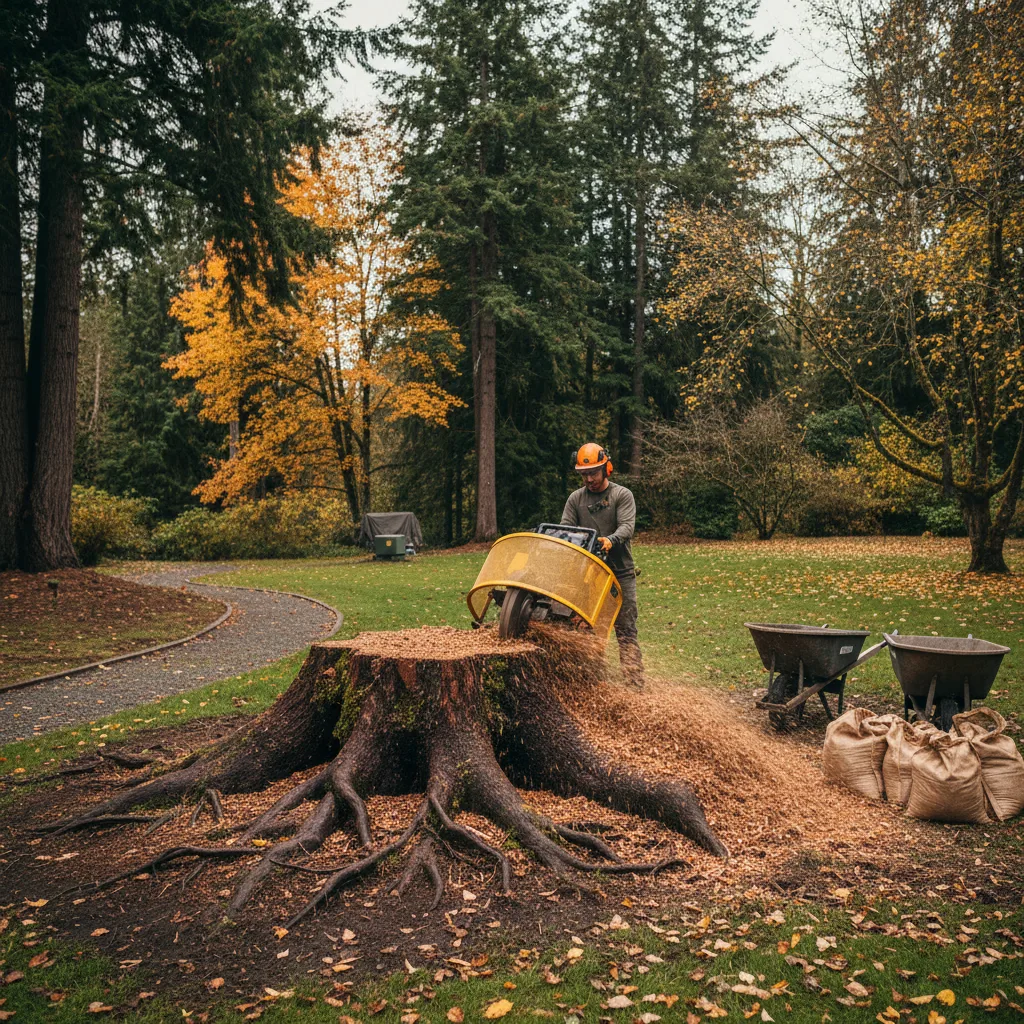
After a large fir or maple comes down in your Beaverton yard, the stump left behind quickly becomes an eyesore, a mowing obstacle, and a home for wood-boring insects. You want it gone, but before calling for quotes, it helps to understand what affects the final bill. Unlike tree removal, where height and branch spread drive cost, stump grinding pricing depends on diameter, root-system complexity, how the crew reaches the work site, and what you decide to do with the resulting pile of wood chips. This guide walks through each factor so you can plan your autumn cleanup with realistic expectations and compare estimates with confidence.
Why Autumn Is a Practical Season for Stump Grinding in Beaverton
Many Beaverton homeowners and property managers schedule stump work in the fall after summer projects wrap up and before winter rains turn lawns into soft, muddy terrain. Autumn weather allows equipment to cross yards without excessive rutting, and preparing planting beds or reseeding patched lawn gives new grass several weeks to establish before the wettest months arrive. Addressing stumps now also clears space for holiday outdoor decorations, removes tripping hazards along walkways, and prevents moss-covered decay that attracts carpenter ants or termites over winter.
Although stump grinders can operate year-round in western Oregon, frozen ground in January or waterlogged soil in February may complicate access or limit scheduling. Completing the work in October or November means you start spring with a clean slate and no leftover project weighing on your list.
Key Factors That Shape Stump Grinding Cost in Beaverton, Oregon
Stump grinding involves using a specialized machine with a rotating carbide-toothed wheel to chip away wood and surface roots until the remaining material sits several inches below grade. The process differs substantially from complete root removal, which requires excavation and leaves a large hole. Most residential projects grind the stump six to twelve inches below the soil surface, enough to allow grass, topsoil, or new plantings to cover the area. Understanding how professionals calculate stump grinding cost in Beaverton, Oregon, helps you compare quotes and avoid surprise fees.
Stump Diameter
The single largest driver of pricing is the stump's diameter at ground level, measured across the widest point of the cut surface or root flare. A twelve-inch ornamental cherry stump takes minutes to reduce, while a forty-inch Douglas fir with exposed buttress roots may require an hour or more of grinding. Many crews price by the inch, charging a base rate for smaller stumps and adding a per-inch fee beyond a threshold. Expect quotes to vary based on whether the diameter includes just the trunk or the entire root collar.
Root Complexity and Surface Roots
Some species develop wide, shallow root systems that spread across lawns and wrap around buried irrigation lines. Grinding these surface roots adds time and wear to the cutting wheel. Maples, for example, often produce surface roots that snake several feet from the trunk, while conifers like firs and cedars may send thick anchoring roots downward with fewer near-surface obstacles. If you need surface roots ground flush to prepare for sod or paving, discuss that scope during the assessment so the quote reflects the additional work.
Multiple Stumps
Removing several stumps on one visit typically costs less per stump than scheduling separate trips. The crew already has the grinder on-site, so adding a second or third stump means incremental machine time rather than mobilization, setup, and breakdown for each job. If you have multiple stumps from a row of trees or past removals, mention them all when requesting a quote to capture any volume discount.
Stump Diameter and Root Flare Measurements Explained
When a tree service professional measures a stump, they look at the diameter at the widest cut or flare point, not the trunk's diameter five feet up. Root flare is the swelling where major roots emerge from the base, and it can add several inches to the measurement. A tree that measured twenty inches in trunk diameter at chest height may produce a thirty-inch stump when the cut sits close to the ground and includes the flare.
Some stumps sit flush with the lawn after a neat cut, while others protrude a foot or more if the tree was felled in sections or the roots lifted during windthrow. Taller stumps require grinding more vertical wood before reaching below-grade depth, so the crew may recommend cutting the stump lower with a chainsaw to reduce grinding time and cost. If you saved the stump high to use as a lever during removal, ask whether a flush cut would lower the quote before the grinder arrives.
Root spread also matters when the stump sits near fences, garden beds, or sidewalks. Grinding exposes and removes roots within the machine's reach, typically three to four feet from the trunk center, but roots extending farther remain in the soil. If those outlying roots interfere with construction or replanting, you may need excavation rather than grinding alone.
Access, Buried Utilities, and Yard Obstacles
Stump grinders range from compact walk-behind units that fit through a thirty-six-inch gate to large tow-behind machines requiring truck access. A stump in the front yard near the driveway costs less to reach than one in a fenced backyard accessible only through a narrow side yard or across soft lawn. Limited access means the crew brings smaller equipment, which increases grinding time and labor, or they carry a larger machine farther, adding setup effort.
Evaluating Your Property Access
Before requesting a quote, measure the width of gates, pathways, and any openings between the street and the stump location. Note any steps, slopes, sprinkler heads, or decorative plantings along the route. If access requires crossing a lawn, consider recent rain that might leave soil muddy and prone to rutting. Experienced crews assess access during the free on-site visit and recommend the appropriate machine size, but providing details up front helps them prepare an accurate estimate.
Locating Buried Utilities
Grinding below grade near roots raises the risk of striking buried gas lines, water pipes, electrical conduit, or fiber-optic cable. Oregon law requires property owners or contractors to request utility locates through Oregon 811 before digging or grinding. The free service marks public utility lines, but private lines like sprinkler systems, landscape lighting, or septic laterals remain the property owner's responsibility to identify. If you know a utility crosses the stump area, mark it clearly and discuss it during the assessment so the crew can grind carefully or adjust depth to avoid damage.
Obstacles and Landscaping Protection
Stumps surrounded by flower beds, retaining walls, boulders, or patio pavers require extra care. Grinder wheels throw chips in an arc, so the crew uses tarps or plywood to protect nearby surfaces. Tight quarters increase the time required to maneuver equipment and clean up, which can influence the quote. If you can temporarily move potted plants, lawn furniture, or decorative stones, doing so before the appointment simplifies the job and may reduce cost.
Debris Management: Wood Chips and Backfilling Options
Grinding a stump produces a substantial volume of wood chips mixed with soil. A large fir stump may yield several wheelbarrows of mulch-like material, enough to spread around shrubs, fill the depression left by grinding, or haul away. How you choose to handle the chips affects the project's overall cost and cleanup scope.
Leaving Chips On-Site
Many Beaverton homeowners rake the chips into garden beds as organic mulch or use them to fill the stump depression and level the grade. Fresh chips from conifer stumps decompose slowly and can tie up nitrogen in the soil, so avoid mixing them directly into planting beds. Spreading a thin layer on top as mulch works well, or pile them in an out-of-the-way corner to age for a season before use. Leaving chips on your property typically reduces the quote because the crew does not load, haul, or dispose of them.
Chip Removal and Hauling
If you prefer a completely clean site, the crew can rake, load, and haul away all chips. This service adds labor and disposal time, so expect the quote to reflect that work. Some services include chip removal in their base pricing, while others list it as an add-on. Clarify what the quote covers to avoid confusion on the day of the job.
Backfilling the Depression
Grinding below grade leaves a shallow bowl where the stump sat. Filling it with a mix of chips, topsoil, and compost brings the area level with the surrounding lawn and prepares it for grass seed or sod. If you plan to replant a tree in the same spot, remove as many chips as practical and replace them with fresh soil to give new roots room to grow. Backfilling and seeding are separate tasks from grinding itself, so budget time or cost for those finishing steps if you want the area fully restored.
Frequently Asked Questions About Stump Grinding Cost in Beaverton
Does stump grinding cost vary by tree species?
Species affects grinding indirectly through wood density and root structure. Hardwoods like oak or maple wear cutting teeth faster than softer woods like cedar or cottonwood, which may increase the time required. Surface-root species also add complexity. Most local crews price primarily by diameter and access rather than species alone, but very dense or resinous stumps can influence the quote.
Can I save money by cutting the stump flush myself?
Cutting a tall stump lower with a chainsaw before the crew arrives can reduce grinding time, especially if the stump protrudes two or three feet above grade. However, chainsaw work near the ground risks hitting dirt, rocks, or metal embedded during the tree's life, which dulls the chain. If you feel comfortable making a low cut, do so carefully, but many crews include a flush cut in their service if needed.
How deep does stump grinding go, and does depth affect cost?
Standard residential grinding removes the stump six to twelve inches below the surface, enough to cover with topsoil and grass. Grinding deeper requires more machine time and exposes more roots, so quotes for deeper work reflect that effort. If you plan to install a fence post, pour a slab, or plant a large replacement tree, discuss the required depth during the assessment.
Is stump grinding included in tree removal quotes?
Stump grinding is usually priced separately from tree removal because it requires different equipment and may happen on a different day. Some crews offer a package rate when you schedule removal and grinding together, but always confirm what the removal quote includes. At Forest Trunk, stump grinding is discussed as an option during the free tree-removal assessment so you have a complete picture of the project scope and cost.
What happens to roots left in the ground after grinding?
Roots beyond the grinder's reach remain in the soil and decompose naturally over several years. They do not typically resprout unless the species produces suckers, such as some cherry or aspen varieties. The decaying roots eventually release nutrients back into the soil and pose no structural threat to nearby buildings. If specific roots interfere with construction or drainage, excavation is a more appropriate solution than grinding.
Do I need a permit to grind a stump in Beaverton?
Stump grinding itself generally does not require a permit, but regulations vary by jurisdiction and property type. If the tree removal required a permit, verify that stump disposal or site restoration requirements are included. Check with the City of Beaverton or your local municipal office if you have questions about permit requirements for your address.
Planning Your End of Season Yard Work with Forest Trunk
Understanding stump grinding cost in Beaverton, Oregon, helps you budget for the final step in a tree-removal project or clear space for new landscaping before winter. Diameter, root spread, access, and chip handling are the primary cost drivers, and an on-site assessment provides the most accurate quote. Scheduling the work in autumn takes advantage of favorable weather and prepares your property for spring planting or reseeding.
Forest Trunk is a family-owned tree service and property care company based in Beaverton, serving surrounding western Portland communities. The licensed, bonded, and insured crew offers free, no-pressure assessments for stump grinding and removal, providing upfront quotes that reflect your site's specific conditions. Whether you have a single small stump or several large ones scattered across your property, the team measures each carefully, discusses chip disposal and backfilling options, and completes the work with thorough cleanup.
If you are ready to reclaim lawn space, eliminate a tripping hazard, or prepare a planting bed for next season, reach out to Forest Trunk through foresttrunk.com or call (971) 427-3129 to schedule your free assessment. Describe the stump location, approximate size, and any access concerns so the crew can plan the right equipment and give you a clear, honest quote. No job is too small or too big, and every project receives the same careful attention to protect your landscaping and leave your property cleaner than it was found.